-
24 September 2018
Diocesan leaders gather for three-day conference
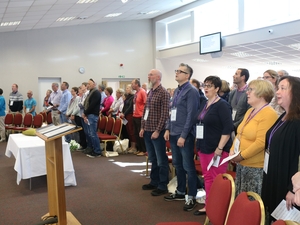
Clergy and lay leaders gathered for a three-day conference in Hertfordshire read more
-
30 September 2015
Diocesan Conference is a real inspiration
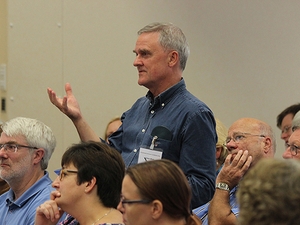
Clergy and lay leaders heard from a variety of inspirational speakers at our Diocesan Conference ... read more
-
30 October 2011
Conference inspires us to make a difference in the world
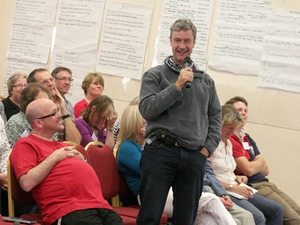
Our Diocesan Conference inspired us to make a difference in this world. Among the speakers ... read more
Diocesan Conference is a real inspiration
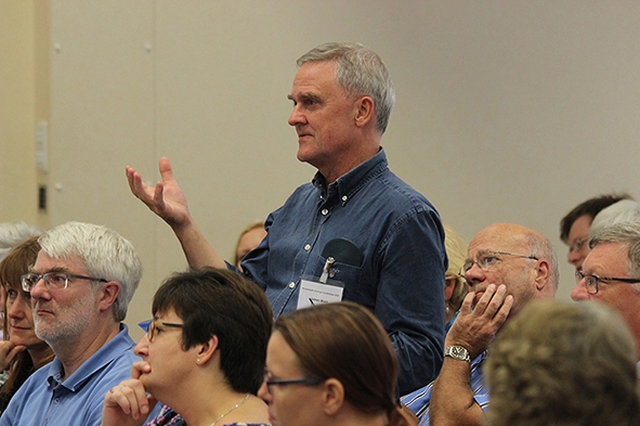
IT was a moment that summed up the sense of purpose and friendship at our Diocesan Conference.
As Bishop Christopher thanked all those who had made it possible and said how proud he was to lead our team of lay and ordained leaders, his voice cracked with emotion and his eyes welled up. He was momentarily overcome as he realised just how much he valued his colleagues.
It came at the end of three days of inspiration, as clergy and lay leaders heard from renowned speakers, enjoyed each other’s company and worshipped together at High Leigh Conference Centre in Hertfordshire.
The Rev Sam Wells, vicar of St Martin-in-the-Fields, in Trafalgar Square, Loretta Minghella, chief executive of Christian Aid, and Baptist minister the Rev Steve Chalke were the main speakers – along with Christian professional comedian Paul Kerensa providing an hour of belly-laughs after the conference dinner.
There were also workshops on a variety of topics, from pioneer ministry to working with older people, and from discipleship to stewardship. A variety of worship styles, including Taizé, Iona, multi-media contemporary and meditation were available.
And throughout the conference, conference artist Jacqui Lea, from Hopeweavers, offered the chance to engage spiritually through art and craft materials. Delegates were able to weave something into a ‘Cross of Meeting’, including fabric from Ghana. They also brought broken items to be glued into another cross, which is now on display in our cathedral.
Opening the conference, the Rev Sam Wells explained the development of St Martin-in-the-Fields Church, including its work with the homeless. He then delivered a powerful reflection on the topical issue of migrants.
“The significant displacement of populations is at root the fallout of the global political and economic system,” he said. “Migrants are the flotsam and jetsam of the ocean wave of global power. The perceived crisis over migration arises from the assumption by Western governments that the only way to deal with the symptoms of this global fallout is to shoo people away for as long as possible.”
He compared the Biblical story of Ruth with the attitude of churches today. “What Ruth’s story shows is that the foreigner who appears to be nothing more a bundle of trouble turns out to bring vital initiative and energy, and ultimately becomes the harbinger of the nation’s hope for renewal.”
Later in the day, he offered a similar reflection on the UK’s over-stretched welfare system. He examined the reasons why William Beveridge proposed the system in the 1940s – to rid the country of want, idleness, ignorance, disease and squalor.
He examined to what extent those had been achieved and proposed five goals of social care for our era – to provide relationship, creativity, partnership, compassion and joy.
Loretta Minghella, whose family come from the Isle of Wight, introduced the second day by talking about her personal faith journey and her journey from working in the financial sector to leading a charity committed to helping the world’s poorest.
During the 2008 financial crisis, she spent £14bn in one weekend to prop up an ailing bank – leading her to wonder if that money could have been better spent. Part of her story included her grief at the death her brother, the film director Anthony.
“Poverty and injustice involve a dehumanisation process,” she said. “Overcoming poverty is about doing things with people, not to them. It’s about building relationships to help people to feel as though they are in control of their own destiny.”
Day 3 began with an address by the Rev Steve Chalke, who explained how he had transformed a tiny Baptist church in inner-city London by working alongside the local community. It now runs a primary school, academy, Foodbank, debt advice centre, playspace and a city farm.
He also urged church leaders to start with the ‘why’ of doing things – our ultimate purpose – before working out ‘how’ and ‘what’ to do. “I’m amazed at the number of people caught up in the urgent who fail to see their ultimate goal,” he said. “We wanted to do things with people, not to them or for them.”
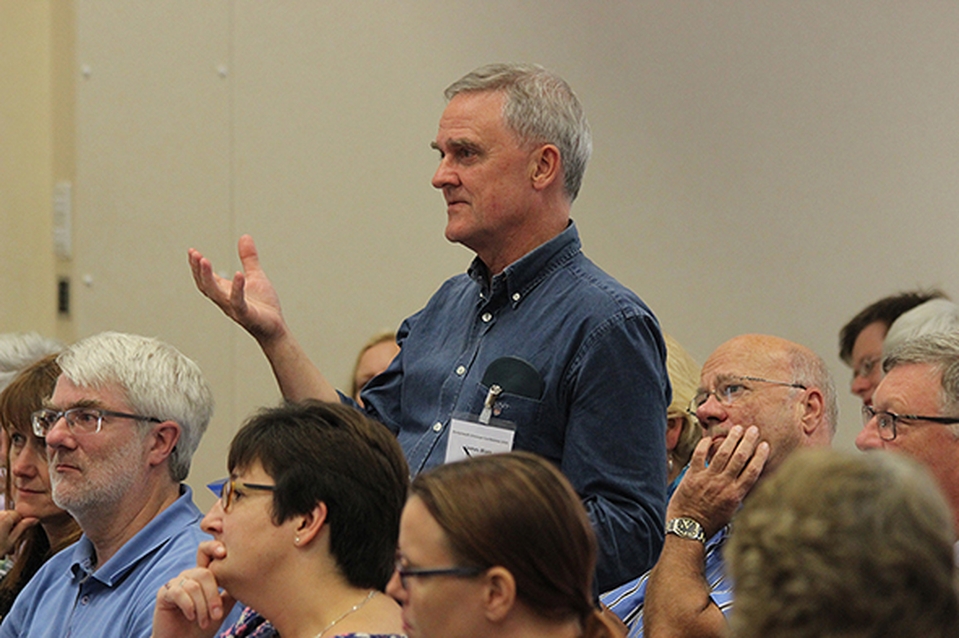
WHAT DELEGATES THOUGHT
“It’s a welcome opportunity to meet colleagues in the diocese and share ideas. The speakers were of a high standard, and all relevant. The theme of being truly with people, with God and with each other is what I’m taking home. The challenge is to apply it to our daily life.”
The Rev James Cook, priest-in-charge, Christ Church, Totland
“It’s great to find things that are refreshing and encouraging, and to go back with one or two things that I know I’ll remember.”
The Rev David Proud, vicar, Bedhampton
“It’s been incredibly well-run. We’ve gone from one thing to another without having to worry about anything. It’s all been laid on for us.”
The Rev Nicky-Sue Terry, vicar, St Mary’s, Warsash
“I’ve been inspired by the warmth and hospitality everyone has shown to me. It makes me more confident we can share in future across faith communities. The session I led was an opportunity for people to be very frank, face-to-face. That wouldn’t be possible without deep existing relationships.”
Sheikh Fazle, Wessex Jamaat Community, Wickham