-

10 February 2026
LENT APPEAL: Chance to see Tearfund projects in Rwanda
As part of our Bishop’s Lent Appeal for 2026, our Head of Safeguarding Emily Hassan ... read more
-

9 February 2026
LENT APPEAL: Donations will lift families in Myanmar out of poverty
Your donations to the Bishop’s Lent Appeal will help to support families in Myanmar, via ... read more
-
28 January 2026
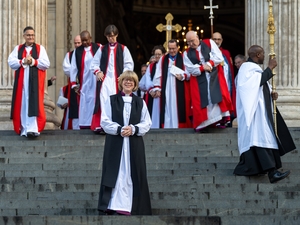
Cathedral service confirms Dame Sarah as first female Archbishop
The Most Rev Dame Sarah Mullally has become the first woman to be the Archbishop ... read more
Bishop proposes amendments to education bill
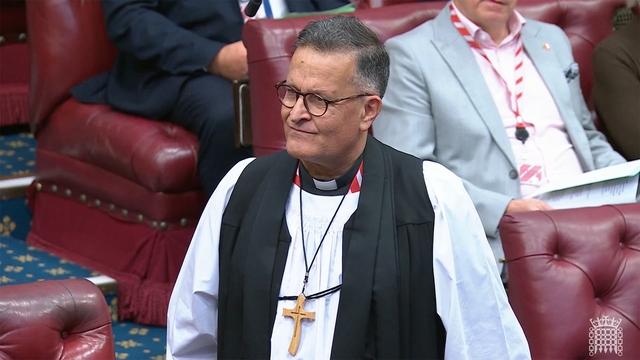
BISHOP Jonathan suggested amendments to an education bill this week as part of his Parliamentary role.
The bishop tabled three amendments in a late-night debate in the House of Lords on a bill relating to school inspections. He suggested that inspectors should be required to inform the relevant religious body when inspecting academies, and also that there should be church inspections of multi-academy trusts where they contain schools with a religious designation.
This would bring multi-academy trusts in line with individual church schools, which are inspected as part of the Statutory Inspection of Anglican and Methodist Schools (SIAMS) framework. This allows an inspection of their ethos, RE and collective worship.
Bishop Jonathan explained that more than 42 per cent of Church of England schools are academies, amounting to more than 20 per cent of all academies in England. Including Roman Catholic academies and those with other religious foundations brought the number to around a third of the entire academy estate.
He said: “All these academies will fall under the proposed new requirement for the inspection of multi-academy trusts. However, at present there is no provision for the specialist denominational inspection of those multi-academy trusts that have direct responsibility for the leadership and governance of academies with a religious foundation.
“There is no provision within the Bill as drafted to deliver expert, individual, school-based evaluation and accountability for multi-academy trusts containing schools of a religious character and foundation. This is an omission or oversight with potential to affect adversely the quality of accountability and inspection for approximately a third of the academy estate.
“My amendment addresses this omission by seeking to mirror current good practice for multi-academy trusts containing schools with a religious foundation.
“Led by the inspectorates of religious bodies such as the Statutory Inspection of Anglican and Methodist Schools, inspections would combine, as they do most effectively today, the application of expert religious knowledge with inspection expertise to ensure that the accountability regime for the proprietors of academies includes all significant elements of the life, leadership and governance of schools in their purview.”
However, Baroness Smith of Malvern, the Minister of State for Skills, responded by suggesting that the current framework for inspecting denominational education and worship is already a complex mixture of statutory and non-statutory provisions. She declined to accept the amendments.
She said: “Moving directly to a statutory framework for academy trusts at this stage risks adding further complexity to that element of the inspection. It is therefore important that we take the time necessary to develop any future approach carefully so that trust-level inspection of denominational matters aligns with existing arrangements of this nature for individual settings, and functions coherently with the wider inspection system.
“Officials have had discussions with officers from the Catholic Education Service and the Church of England Education Office. We are committed to working with the churches and other faiths to developing a non-statutory framework as an initial and constructive step, ahead of considering opportunities for potential legislation in the future. That work will include pilots, which have been developed with faith bodies and trusts to pilot inspection of collective worship and denominational education trusts with faith schools.”
Bishop Jonathah accepted that he had received the relevant assurances he needed from the government, despite the amendments not being formally accepted as part of the Parliamentary debate.