- Climate change is simple physics and chemistry, and the greenhouse effect theory was first suggested in the 19th century...
BUT the issues involved are so complex that the UN Convention on Climate Change still can’t mention the phrase “fossil fuels” because oil companies don’t want us to cut carbon emissions; - Climate change is an existential threat to everyone under 40 years old (eg. there were 24,000 heat-related deaths in Europe in 2025, and flooding and food shortages are likely to follow)...
BUT most of us are worried about other things (which may be equally valid, such as food poverty, or housing or unemployment or access to medical care). It’s hard to think about doing something about the environment when other things seem more urgent - The government’s central job is to protect citizens from existential threats (such as war, famine and flood)...
BUT more politicians are seeking to increases their electoral prospects by denying the reality of climate change or postponing action. - The Church has dwindling numbers of participants, is challenged by divisions and has a shortage of funds...
BUT churches have unique assets, including buildings, people, community links, a national voice, investments and international connections that could make a massive difference to climate change. - Loving God and loving your neighbour: this fundamental principle might encourage you to worship God for his creation and save others from damage caused by climate change;
- Upholding the truth: in the face of influential people who don’t seem to care about the truth, we need to have the courage and confidence to tell the truth about climate change and challenge those in our churches.
- Displaying the fruits of the Spirit (Galatians 5): many people aren’t knowingly opposing the science, but they happen to be worried about other things. So we need to show love and patience, not belittling or criticising people, but helping them to see what they can do about the issue.
- Using the gifts of the Spirit (1 Corinthians 12): you need different kinds of people with different gifts: the one who gets into the technical details, the one who loves gardening, the one who does the research, the one who leads in sung worship. All of them can do what God has called them to do in their specific sphere of life.
-
14 April, IN: Environment
Webinar: Give To Go Green
In the first of a new seres of NZC webinars we are joined by Grace ... read more
-
02 June, IN: Environment
Webinar: Carbon Offsetting
What is carbon offsetting, and can it help your church on the journey towards net ... read more
Clergy spend day focussed on climate care
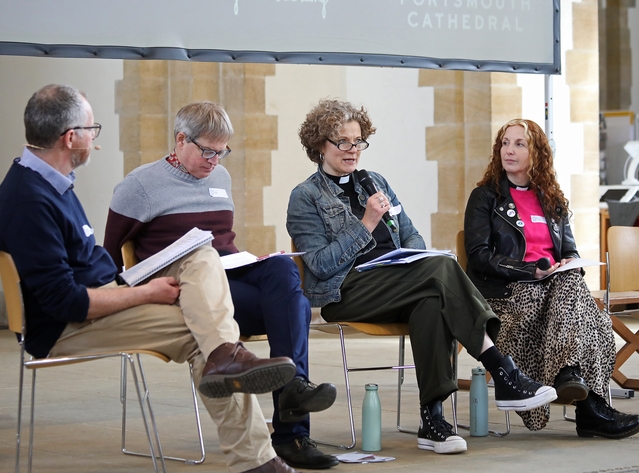
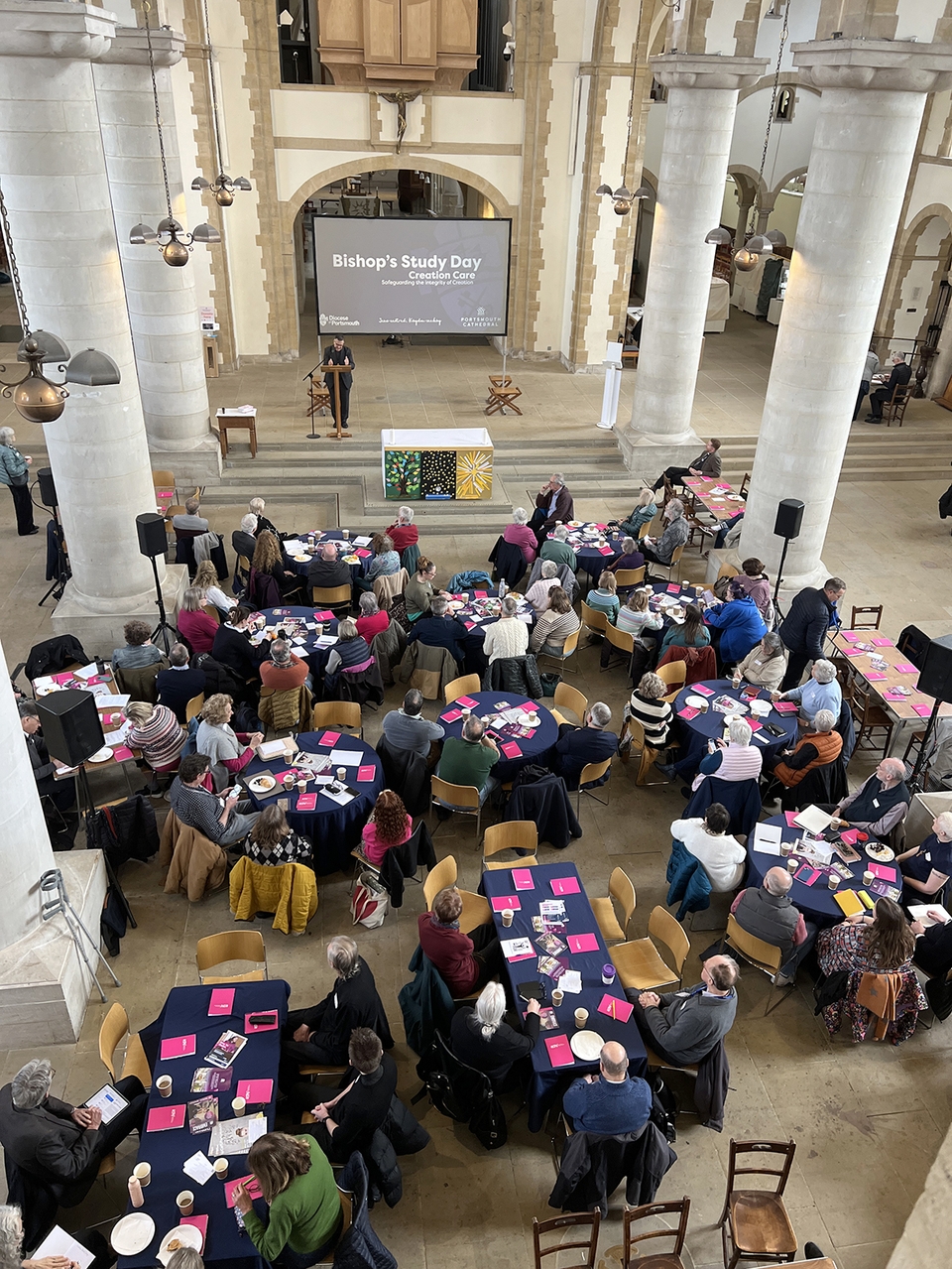
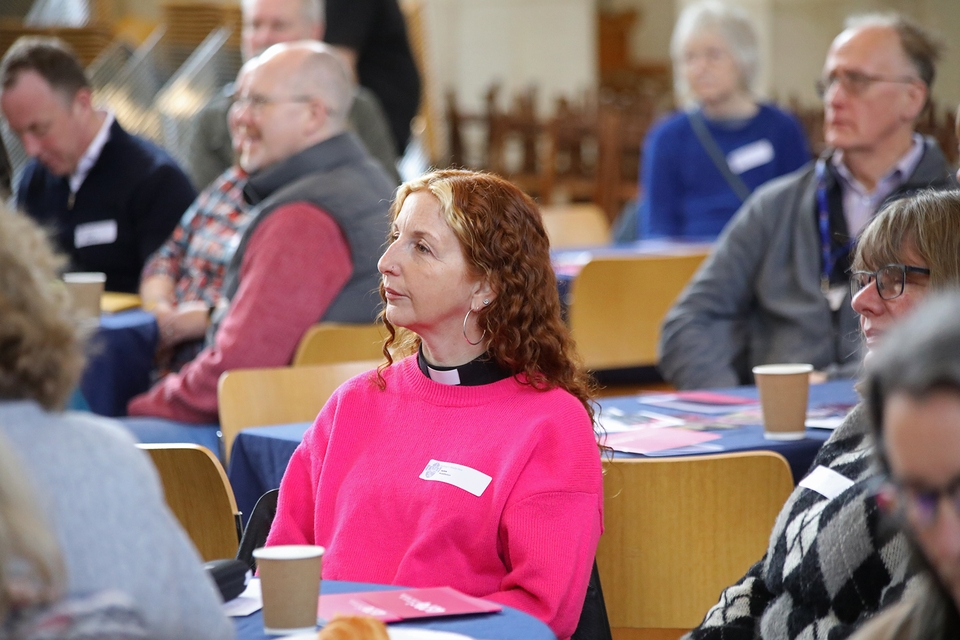
CLERGY and lay ministers from across our diocese spent a day at our cathedral looking at how we should care for God’s creation.
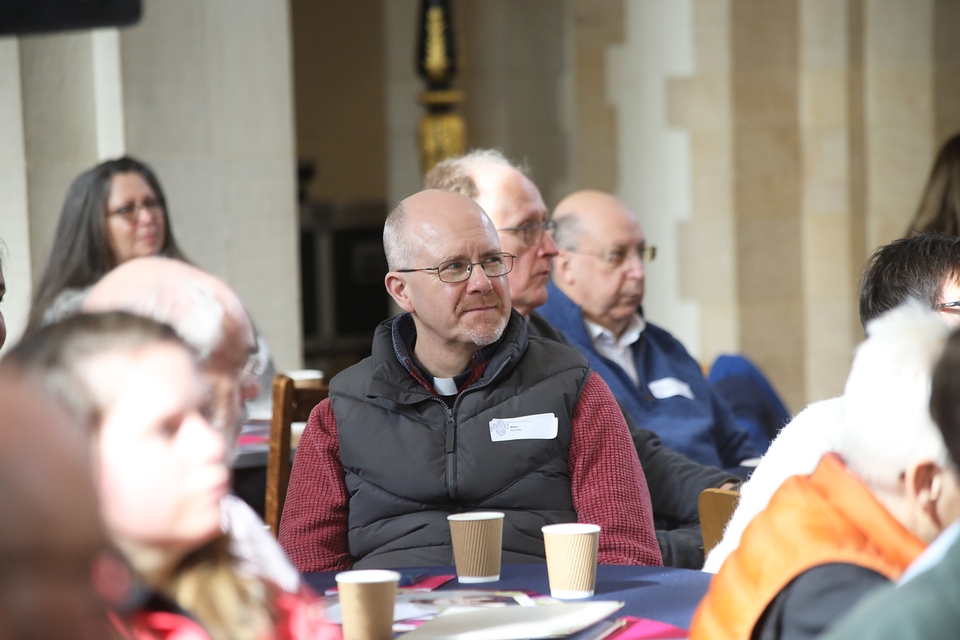
The latest Bishop’s Study Day focussed on the theology behind creation care, the reality of global climate change, and practical ways that our parishes can make a difference. There were talks, discussion and the chance to a panel questions about the issue. The day also included lunch and a celebration of the Eucharist.
Among the external speakers was theologian and activist Dr Ruth Valerio, who now works for Embrace the Middle East. As well as touching on the current conflict in the Middle East, she outlined the various ways in which church leaders might see their roles influenced by consideration of creation care – it might affect our churches’ worship, their walk, and their witness. She stressed this wasn’t just another issue to add to the list of things to do, but often about doing the same things in before in a different way – while thinking of the impact on our environment.
Ruth then gave a theological underpinning to the rest of the day by thinking about the Creation narrative in Genesis – and contrasting it with the Babylonian creation narrative that preceded it. She suggested that the Genesis Creation story was written as it was precisely to highlight the differences between the Hebrew God and the Babylonian family of gods.
The Genesis Creation story also highlights certain things about God, about the world, and about humankind. Among other things, our God is a singular, supreme being who empties himself to create space for his creation; our world is described as being "good" rather than coming from an evil source; and humankind is created to care for and to be intimately connected with God's creation.
She said: “This gives us fresh ways of thinking about God, our world and our place in it. We don’t embrace creation care because of a secular agenda, or because of science, or because it is popular, but because it is fundamental to our Christian faith.”
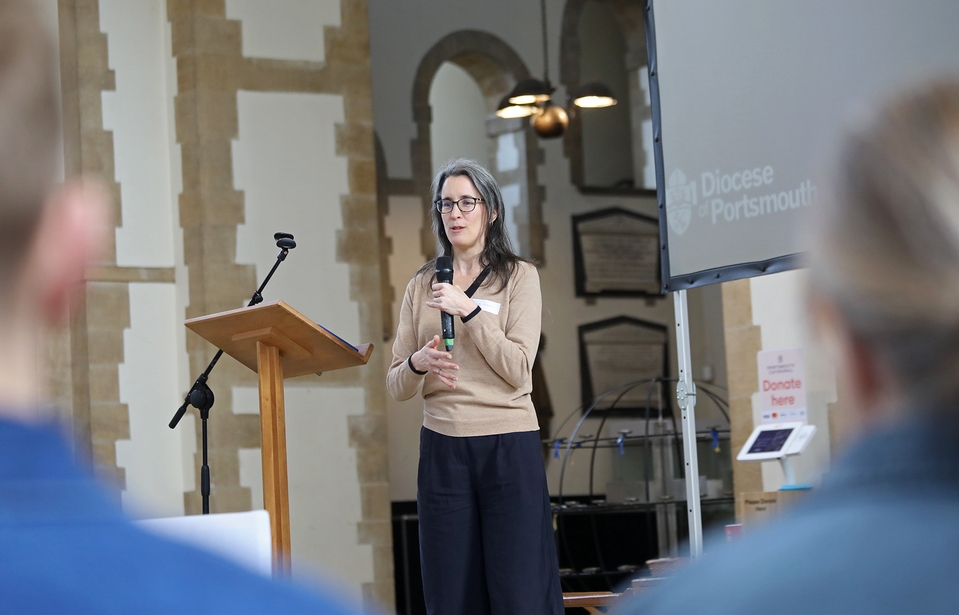
There was also input from Andy Atkins, chief executive of the environmental charity A Rocha. He suggested that there were some fundamental paradoxes about society's response to this issue:
He suggested four Biblical principles that might help us to make a difference:
During the Eucharist, there was a sermon from Duncan Dormer, chief executive of USPG and a Canon Theologian at our cathedral. He challenged the ‘lop-sided theology’ in some of our western churches that creates a division between God and his creation, and between the body and the mind.
“Creation is actually ‘God-breathed’, and we are part of that creation, we carry the mark of Creation within our bodies,” he said. “You can't engage with climate justice simply as an example of good works, or out of a sense of duty, rather it should come from a place of embracing. It should be a work of our hearts, with Jesus as the one in whom all things were created. The Earth is the first theologian, as it reveals God to us and through us.”
Duncan was also part of a panel that answered questions about the issue, alongside the Rev Hannah Mayo, assistant curate at Holy Trinity, Wescott in Guildford diocese; the Rev Jules Middleton, vicar of St Edmunds’ Burgess Hill in the Diocese of Chichester. The session was compered by Steve Collins, who was our diocese’s net zero programme manager, and is now the national CofE’s decarbonising lead.
They suggested possible practical ways in which churches could make a difference, including adding the item to each PCC meeting, recruiting eco-champions from within congregations, and using church land to create ecological gardens that would value nature and allow outreach to like-minded people in the community.
Duncan Dormer also suggested that young people are often looking for authenticity in institutions that share their values, and that churches that cared about environmental issues were often attractive for them.