-
13 October 2026
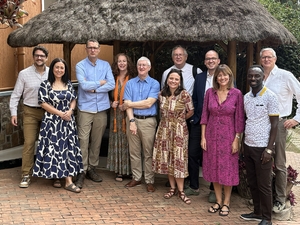
Emily spends a week seeing Tearfund’s work in Rwanda
Our Director of Safeguarding Emily Hassan accepted the offer of Christian charity Tearfund to see ... read more
-
3 October 2026
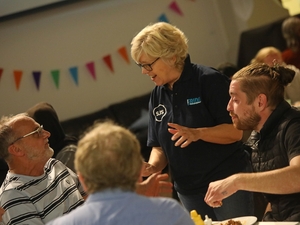
Twenty years of serving the needy in Southsea
Volunteers and guests celebrated 20 years of Friday Fridge – the weekly ministry offered by ... read more
-
24 September 2026
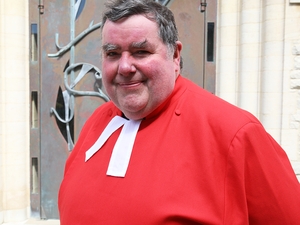
Archdeacon: “Why I have hope, despite the helplessness”
The Archdeacon of Portsdown responds to the recent arrival of a migrant boat at Eastney ... read more
Young people need help to battle mental health issues
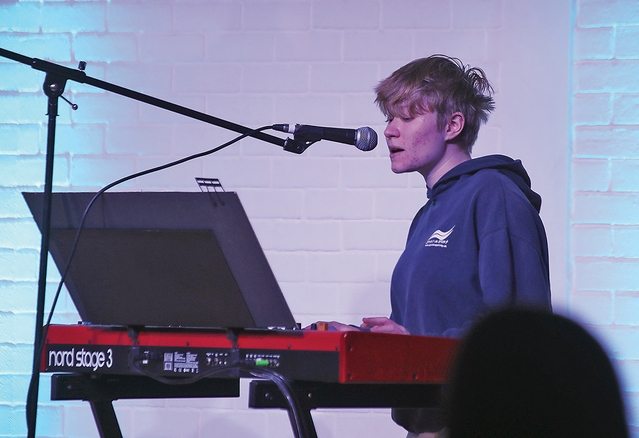
IF you see Chloe Bacon leading worship or acting on stage, you might assume she is always confident in herself. The 18-year-old college student has real skills in acting, singing and in talking about her faith.
But there are days when she doesn’t feel able to get out of bed. And there have been times when she has self-harmed. Chloe has been diagnosed with moderate to severe depressive episodes, and is being treated with medication and regular counselling.
Her mental health issues have been a big part of her life for more than four years now. Although she is learning how to deal with them, when the bad days come, it still feels very real.
Chloe, who goes to St Jude’s Church, Southsea, is among thousands of young people living with a mental health disorder. The NHS estimate that one in five of those aged between eight and 25 years old has mental health issues, and the numbers have risen since 2017. It’s an issue we can see in our churches and church schools.
“When I have episodes, I lack motivation,” she said. “I feel sad and I just want to lay in bed. That can sometimes trigger self-harm, which takes the form of cutting myself. I can find it difficult to go to college on those days, but I’ve told my teachers and I can just email them and say I’m having a bad day.
“Because it’s been going on for a while, I have also become good at masking it. With performing drama and leading worship, it’s not actually about me, which is better. If I’m having a bad day, I can push myself to try the worship, and it can cheer me up to praise God.
“And once I’m actually performing the drama, I can manage to focus on being someone else for a couple of hours. You can step out of being yourself for a bit.
“I’ve had cognitive behaviour therapy and counselling, and I’m on medication. Since the medication, I’ve self-harmed less often. When that was all hidden from view, that was a real mess. But when you can speak about it without judgement with people who have been there before you, it’s easier to prevent it happening.
“Self-harm feels like it has been stigmatised within the Church, or that people have skirted around it. But more recently things have become more proactive, and church is a really good place of love and acceptance to talk about these things with people who aren’t family.
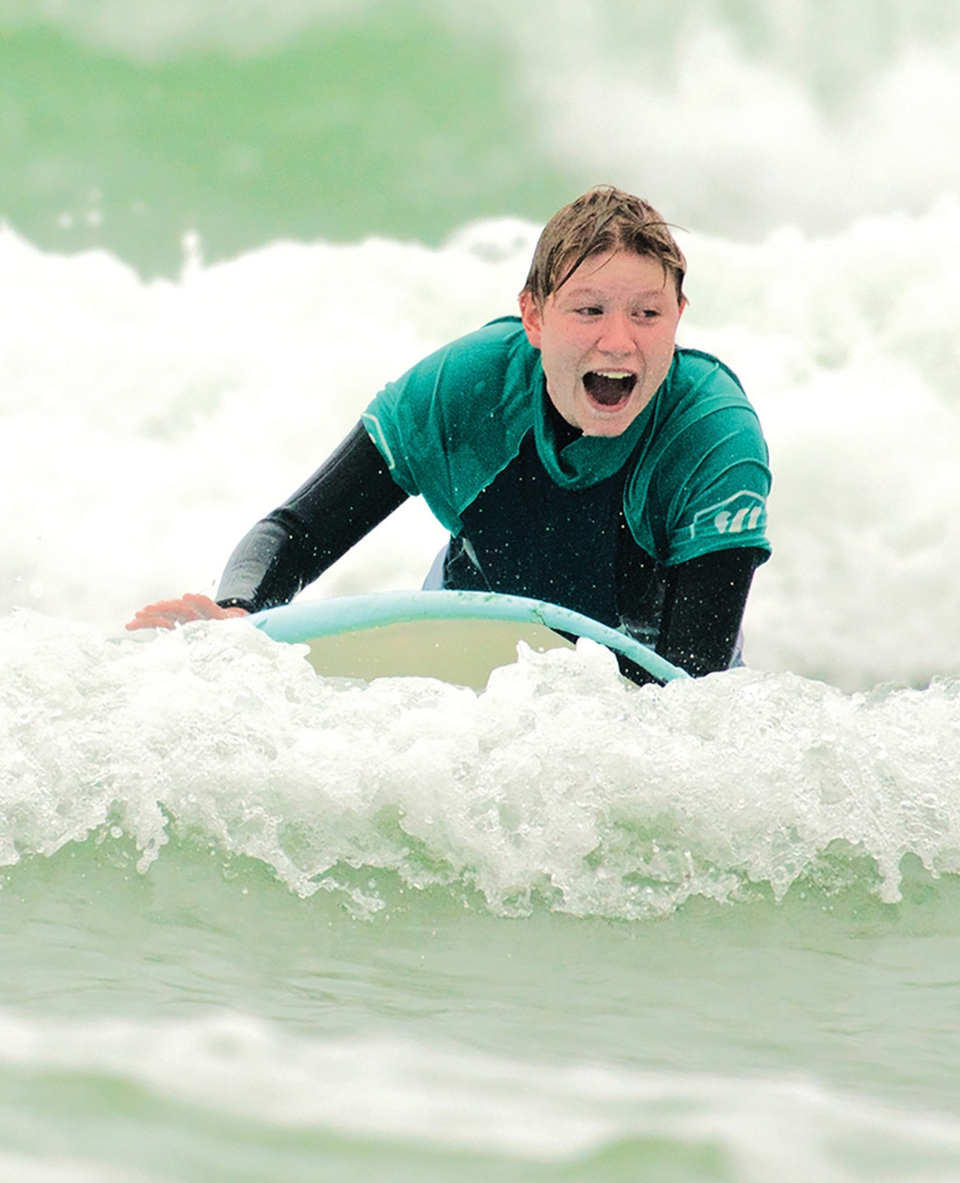
“When a group of St Jude’s teenagers went to Surf Camp in summer 2024, I became aware that I would be swimming and wearing short-sleeved clothes, and therefore my scars would be visible.
“It meant that I talked to people about it, and it was actually encouraging to be in an environment that was safe. It was my first experience feeling self-conscious about how my struggles had physically affected me, but I felt supported.
“In fact, Christian holidays of all sorts have been helpful – the regular High Tide summer holidays with young people from across the area, New Wine, and Bears Camp with St Jude’s families. Being surrounded by friends means that whatever you are feeling, it’s OK.
“How it’s affected my faith has been different at different times. Over the past couple of years, people have prayed for healing and nothing seems to have happened, which has frustrated me – I’ve asked God why nothing seems to be changing.
“But as I’ve grown into faith, I’ve come to an acceptance that God has a plan. He meets you in your tears. He will use it for good, and there is a reason why I haven’t been healed immediately. Obviously, I can also see God in the medication and therapy. I think I also understand that instant healing wouldn’t necessarily be a permanent fix. God is teaching me that I can build resilience to fight it off when it comes again.
“These days it is easier for me to know what to do when the bad days come, and to recognise that that feeling isn’t permanent. There are days when I’m sad, but more often these days I can pause and know that it will pass.
“It does seem there are so many young people who are suffering now, which maybe says something about our world. Many people can’t understand it, so it’s good to have others who have been through it to talk to, as they know what you are feeling. And when I see others suffering, perhaps those who are younger, I hope I can give them some advice too.”
The mental health of children and young people was one of the three areas identified as priorities by Bishop Jonathan when he was originally announced as our new bishop. Poverty and the environment were the other two.
He said: “Frankly, there is a widely acknowledged system-wide crisis in the provision of mental health services. So many children and young people in distress simply do not receive the support they need at the time they need it, with utterly tragic and life-changing consequences for too many. How then will we respond?“
The Children’s Commissioner for England’s 2024 report noted average waiting times of six months for mental health referrals, with nearly a third waiting over a year. In 2023/24, over 60,000 children were referred for crisis-level support, with nearly 40,000 children waiting for more than two years. Meanwhile, 52 per cent of 17 to 23-year-olds report their mental health getting worse, according to the Children’s Society.
Bishop Jonathan is president of our diocese’s Council for Social Responsibility (CSR), which is addressing this issue. The CSR, led by Canon Nick Ralph, recognised that our local Child and Adolescent Mental Health Services (CAMHS) providers are in crisis and therefore undertook some consultations over the summer of 2023.
That led to the CSR commissioning a report on children and young people’s emotional health from Andrea King, formerly the UK clinical director of the Anna Freud Foundation - a leading UK mental health charity. She recommended prevention work with children, young people and their families, long before they might need help from CAMHS.
Among other things, that led the CSR to employ Lydia Galloway as their programme manager for children and young people’s emotional health and wellbeing.
She has led therapy sessions in Charter Academy for students with specific needs, as well as launching a podcast addressing mental health issues, alongside young people themselves.
The CSR work also led to the creation of a brand new counselling service, Compass Counselling, based in Central Library, in the heart of Portsmouth. You can book sessions with Compass Counselling here.
Our diocese recently trained nine of our curates to become mental health first aiders via MHFA England, so they can offer help to those in their parishes. Two of our diocesan staff – Louise Gifford and Kara Weston – have been through similar training with the British Red Cross.
Kara, who is PA to the Archdeacon of Portsdown, said: “After a few conversations in which people were confiding in me, I felt I needed to be better equipped to deal with such issues. Now I hope I can build a rapport with people so they feel there is a safe place to come in times of need, with no judgement.”